Flow Trading: The JP Morgan Collar Pin
Break from war coverage. I came across this interview about the JP Morgan collar trade.
First time hearing about it, but the idea isn't new. JP Morgan runs a massive hedged equity fund that sells calls and buys puts on SPX to collar their equity exposure. SpotGamma explainer | MenthorQ breakdown
tl;dr: JP Morgan has ~32,000 SPX call contracts at 6,475 strike expiring today. Theory: Dealers hedging these positions create mechanical buying pressure that pins SPX to that strike on expiry.
I like to ask: "Assuming this is 100% true, how does it manifest in markets?"
Today: SPX should gravitate toward 6,475 by close.
Tomorrow: With the collar expiring, the "floor" disappears. SPX should trade lower without that mechanical support.
The Test Trade
I'm testing this with a call butterfly on SPY (cheaper proxy for SPX).
Structure:
- Buy 5x SPY 640 calls
- Sell 10x SPY 648 calls
- Buy 5x SPY 656 calls
- All expiring today (0DTE)
Why this structure: Maximum profit at SPY 648 (equivalent to ~6,475 on SPX). If SPX pins at 6,475, SPY should pin at 648. Call fly profits from landing exactly on the strike.
Entry: SPY ~640 at open (SPX ~6,403). Already at lower breakeven. Pre-market futures up +0.42%.
Thesis: Dealer gamma from JPM collar creates mechanical buying pressure as SPX approaches 6,475. End-of-quarter rebalancing adds fuel. No fundamental catalyst needed - pure mechanics.
If this works: SPY closes near 648, call fly profits, and I roll profits into short MES (micro S&P futures) for tomorrow, expecting the floor to disappear.
If this fails: SPX doesn't gravitate toward 6,475, suggesting either:
- The JPM collar theory is wrong
- The position size isn't large enough to matter
- Other flows overwhelm the pin effect
What I'm Watching
Intraday:
- Does SPX drift toward 6,475 regardless of news flow?
- Does it accelerate into the close (gamma effects strongest near expiry)?
Tomorrow:
- Does SPX trade weaker without the collar support?
- Is there a gap down or sustained selling?
This is a small test position to see if flow-based trades are worth pursuing more seriously. The war dominates headlines, but markets still have mechanics underneath.
Will update with results.
Update: Position Results
What I Actually Traded
| Position | Structure | Qty | Cost |
|---|---|---|---|
| Fly 1 | Buy 640 / Sell 648 / Buy 656 Call | 1x | $174.85 |
| Fly 2 | Buy 646 / Sell 648 / Buy 650 Call | 10x | $200.00 |
| Total | $374.85 |
How I Closed
When SPX reached 6,475 around 18:49, I decided to close the position and take profit. I couldn't directly monitor the market at that time, so I exited at market to lock in gains rather than risk the pin thesis failing.
| Leg | Action | Qty | Price | Proceeds |
|---|---|---|---|---|
| Fly 1 Close | ||||
| 640 Call | Sell | 1 | $8.36 | +$836 |
| 648 Call | Buy | 2 | $1.82 avg | -$364 |
| 656 Call | Sell | 1 | $0.18 | +$18 |
| Fly 2 Close | ||||
| 646 Call | Sell | 10 | $2.47 avg | +$2,470 |
| 648 Call | Buy | 20 | $1.40 avg | -$2,800 |
| 650 Call | Sell | 10 | $0.73 avg | +$730 |
| Gross Proceeds | $890 | |||
| Original Cost | -$375 | |||
| Gross P&L | +$515 | |||
| Fees | -$15 | |||
| Net P&L | ~$500 | |||
Observations
- SPY ≠ 1/10 SPX (Exactly)
Critical lesson: SPY doesn't track SPX at exactly 1/10th:
- SPX close: 6,528
- SPY close: 650.34
- Expected SPY if perfect 1/10: 652.8
- Actual tracking error: ~2.5 points
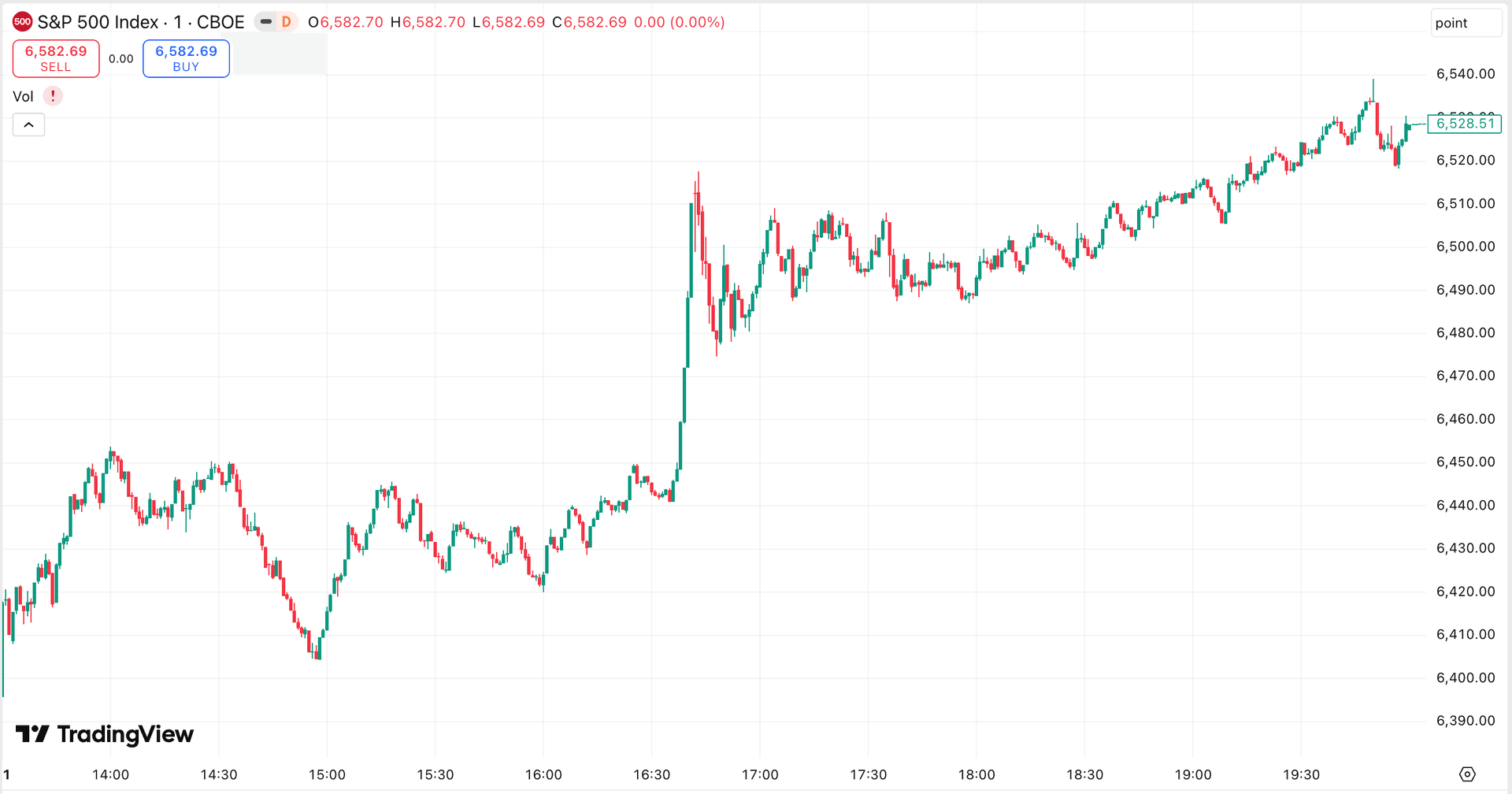
SPX on March 31, 2026
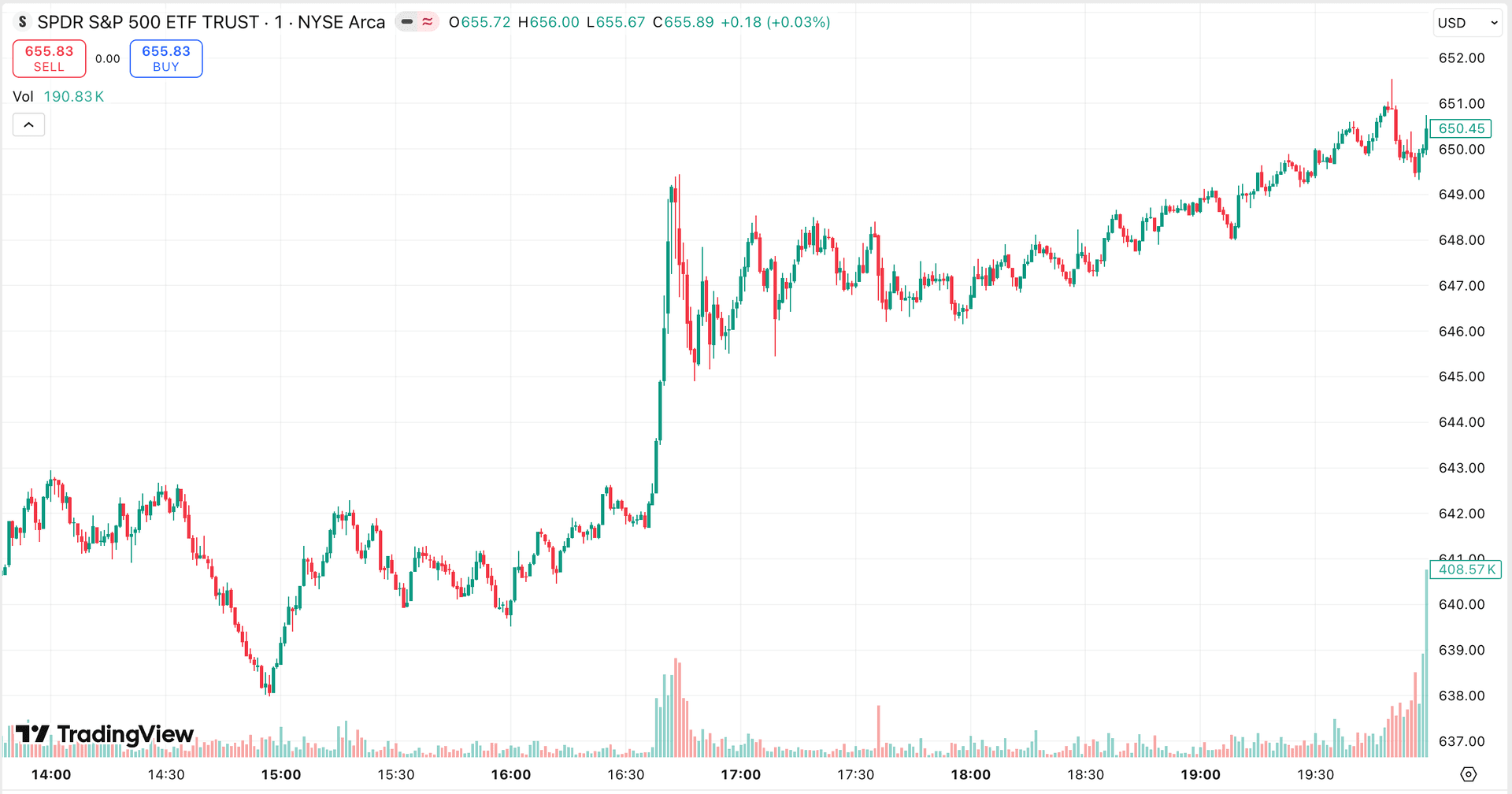
SPY on March 31, 2026
For precise strike-based trades, this matters. I was targeting SPY 648 assuming SPX 6,475. But when SPX hit 6,475, SPY was likely around 647.3-647.7, not exactly 648.
Testing a pin thesis requires trading the actual index options (SPX), not the ETF proxy (SPY).
- SPX Closed Way Above 6,475 Even with the tracking error aside, the pin thesis failed on the underlying. SPX closed at 6,528 - 53 points above the expected 6,475 pin.
Two possible explanations:
- Other flows overwhelmed the pin effect
- The mechanical pin is weaker than expected
Takeaway
The test was inconclusive, not definitive. I exited profitably when SPX reached the theoretical pin level, but the market kept rallying. This could mean:
- The pin effect exists but is temporary/weak
- Other flows dominated that specific day
- The thesis needs refinement (trade SPX not SPY, choose quieter days)
Testing The Other Side: Shorting After Expiry
The second part of the JPM collar thesis: Once the 6,475 put floor expires, SPX should trade lower without that mechanical support. I took profits from the pin trade (~$500) and immediately shorted MES (micro S&P futures) after market close on March 31.
What Actually Happened
| Metric | March 31 Close | April 1 Close | Change |
|---|---|---|---|
| SPX | 6,528 | 6,575 | +47 points (+0.7%) |
Market rallied instead of falling.
The "floor removal" effect didn't manifest. Again, other flows dominated. Ceasefire hope momentum continued, overwhelming any mechanical effect from collar expiry.
Mistake: Too Immediate Trade - I shouldn't have shorted immediately after the pin trade.
The logic was:
- Pin trade profits at ~6,475
- Market rallied to 6,528 by close
- Collar expires, expect weakness next day
- Short at 6,528
The problem:
- No evidence the pin effect ever existed - Market blew through 6,475 and kept going
- Major news catalyst still active - Ceasefire headlines dominating price action
- Chasing a theory after it already failed - If the pin didn't work, why expect the floor removal to work?
Conclusion
The MES short position remains open. I'm watching it through April as part of my broader thesis from You Shall Not Pass, but that's separate from the mechanical floor removal effect - which clearly didn't manifest on April 1.
I'm willing to test the JPM collar pin again with improvements:
- Trade SPX options directly, not SPY - Eliminates tracking error
- Choose a quieter expiry day - No major geopolitical headlines overwhelming flows
The JPM collar is mechanical and predictable.
According to JPMorgan Hedged Equity Fund documentation, the collar resets on the last business day of every quarter.
Next test opportunity: June 30, 2026 (end of Q2 2026)
By then, hopefully the war situation will have resolved one way or another, providing cleaner market conditions to isolate the mechanical pin effect. The theory remains interesting.