QE5: The Return of the Printer
By 2025, it's mainstream news that the US has unsustainable levels of debt and deficit. Everyone knows it, everyone talks about it, but the consequences remain abstract. The US just emerged from its longest-ever government shutdown - 43 days of fiscal darkness. Now that the data is finally flowing again, we can see exactly how bad the situation is. The federal government has spent $284 billion more than it has collected through the first months of fiscal year 2025 - up $27 billion from the same period last year. This is during economic expansion, not recession.
The question isn't if QE happens again. It's when. And more importantly, what will trigger it.
The latest and the biggest QE in history happened in 2020.
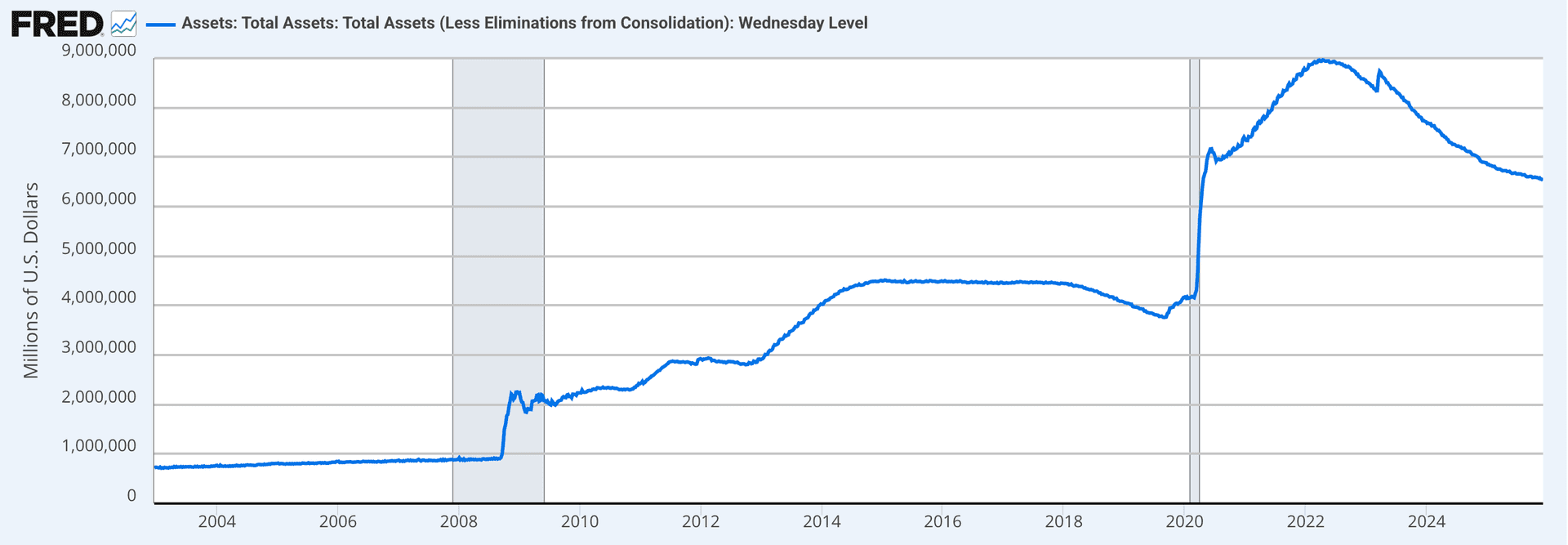
March 2020: Fed balance sheet exploded from $4T to $7T in 12 weeks.
But here's what most people missed: The Fed had already restarted QE six months before COVID.
The Fed switched from QT (balance sheet shrinking) to expansion in fall 2019. They called it "technical adjustments" and "repo operations" - but the balance sheet was growing again.
What forced their hand? Not a pandemic. Not a recession. Overnight repo markets seized up.
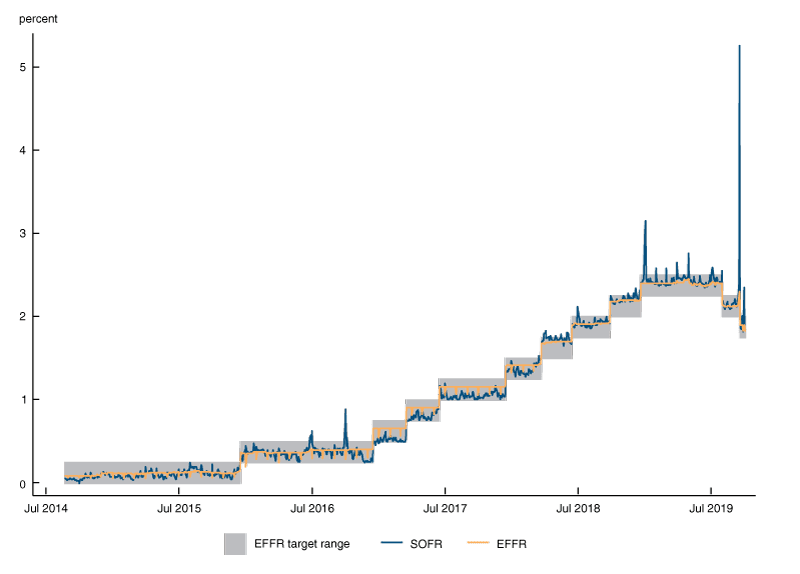
September 2019: Repo rates spiked from 2% to 10% intraday.
The Fed injected $75 billion in emergency liquidity, then announced $60B/month in Treasury purchases.
COVID turbocharged what was already happening. But the trigger for QE restarting wasn't a virus - it was stress in financial market plumbing.
On September 17, 2019, the Fed announced emergency repo operations to stabilize overnight funding markets. What happened next should matter to every trader. From September to January, the S&P 500 rallied from 2,960 to 3,380 - a 15% gain in four months. This was before COVID. No pandemic, no recession, no earnings growth justifying the move. Just liquidity.
The pattern revealed itself clearly: financial plumbing breaks, Fed injects liquidity, asset prices rally on expectations of sustained intervention, and eventually QE becomes official policy. By the time COVID hit in March 2020, the Fed had already established the playbook. They just scaled it up massively. The edge isn't predicting QE from economic forecasts. It's detecting the stress that makes intervention inevitable.
Here's the key insight most traders miss: The Fed doesn't restart QE because of economic data. GDP, unemployment, inflation - these inform rate decisions, but they don't trigger emergency liquidity. QE restarts when financial market infrastructure breaks. The Treasury market is the backbone of the entire global financial system. If repo markets freeze, Treasuries can't trade. If Treasuries can't trade, the whole system grinds to a halt.
This isn't a policy debate. It's an emergency response. QE5 is coming. The only question is what breaks first.