The strike price
19 August 2026: gold moved 3.5% on a four-paragraph press release. Here is what it was actually paying for.
The move
Wednesday, 19 August. XAU/USD opened near $4,335 and traded to $4,522 by the late session, up 4.39% on Tuesday's close. Spot settled around $4,488, up 3.6%.
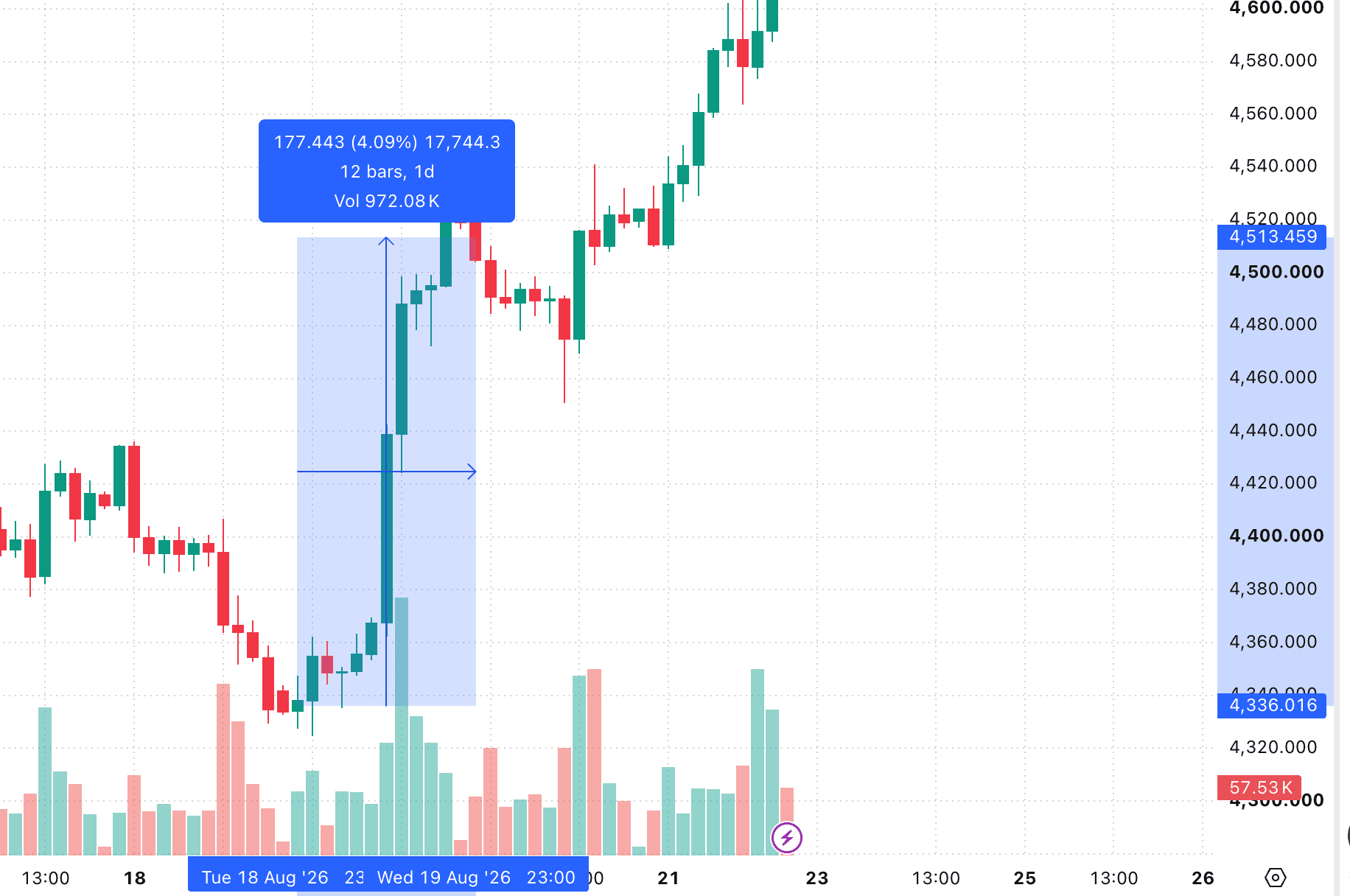
The catalyst was a Treasury press release containing one number.
What happened
On the morning of 19 August, Treasury announced it was increasing, by at least double, the size of liquidity support buyback operations in the 10-to-20 year and 20-to-30 year nominal sectors. Maximum operation size goes from $2 billion to at least $4 billion, effective 9 September, running through the 4 November refunding.
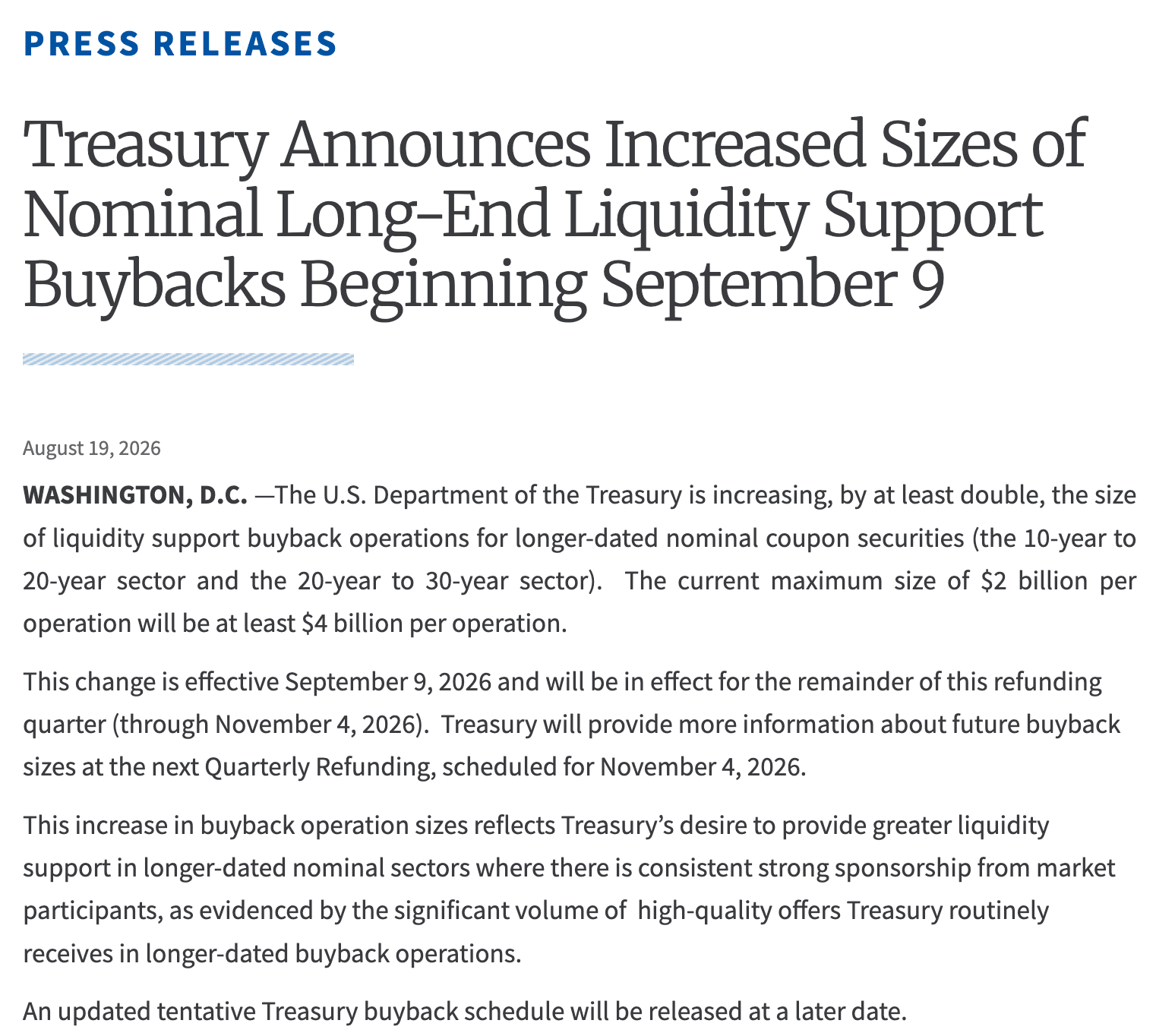
Four things about this document matter more than the headline.
It was off-calendar. Buyback parameters are set at the quarterly refunding. The schedule for this quarter had been published two weeks earlier. Treasury revised its own terms mid-quarter, unprompted, six weeks before it would have had the podium anyway.
Nothing is bought for three weeks. The first operation at the new size runs 10 September in the 10-20 year sector, and 24 September in 20-30 year. On 19 August, precisely zero bonds changed hands.
The size is trivial. Two extra billion per operation, a handful of operations, against roughly $25 billion of 30-year supply that the August refunding alone brought to market. Call it $14 billion of incremental purchases over eight weeks, or about $350 million a day into a sector that trades tens of billions daily.
The stated rationale is backwards. Treasury said the increase reflects consistent strong sponsorship in long-dated sectors, evidenced by the volume of high-quality offers it routinely receives. But an offer in a buyback is a holder asking the government to take paper away. Heavy offers are not evidence of demand for the bonds. They are evidence of supply of them.
So: a rounding error, not yet executed, justified by a sentence that describes selling pressure as if it were buying interest.
Why the announcement, and why that morning
Two facts, both from Treasury's own publications.
The long end was at a nineteen-year high. The par yield curve has the 30-year rejected at 5.18% on 19 May, bottoming at 4.86% on 24 June, then climbing to 5.31% on 17 August — forty basis points added since the end of the second quarter.
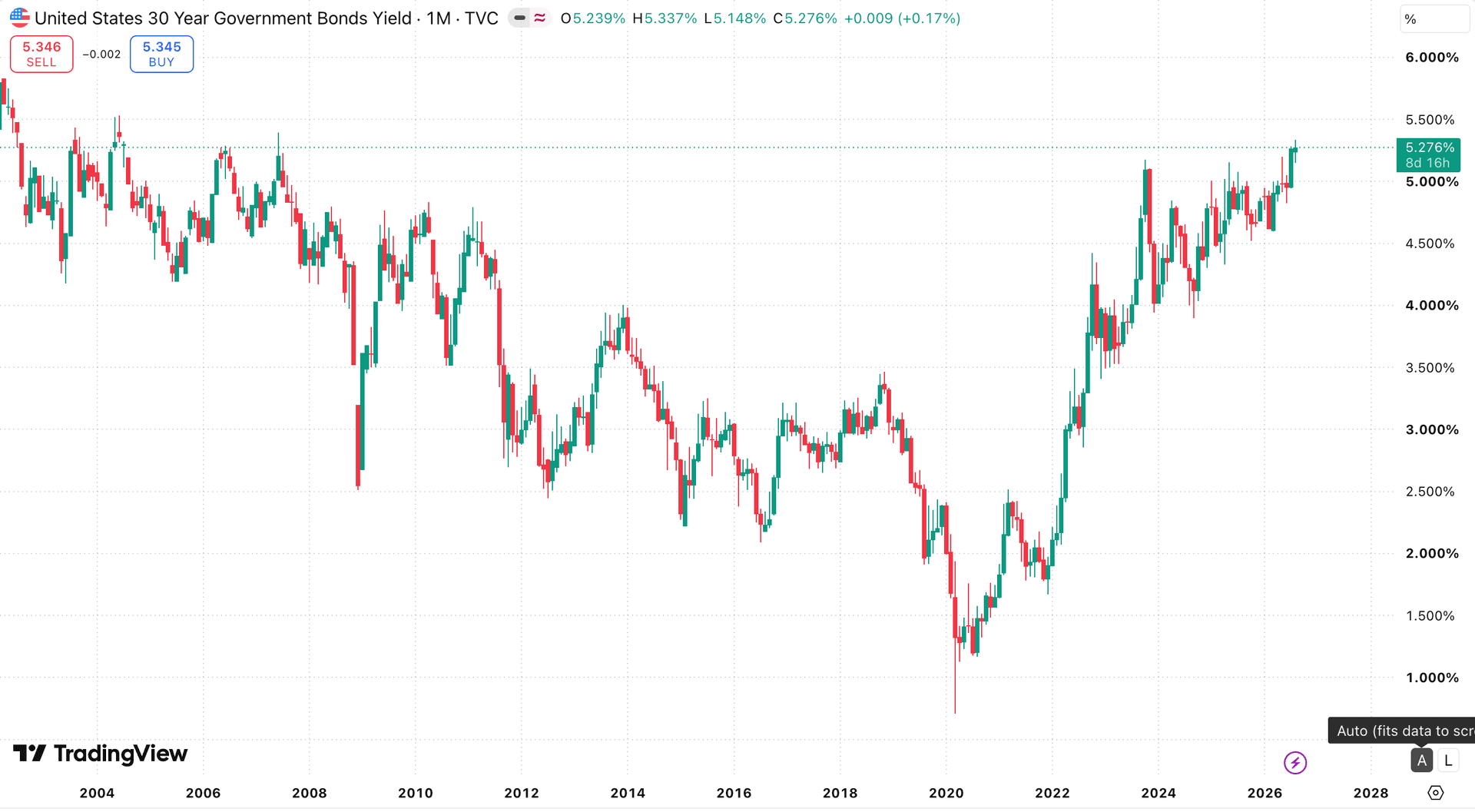
A $16 billion 20-year auction was hours away. Bloomberg reported when-issued indicating around 5.27% the previous Friday, which would have been the highest yield for the tenor since its 2020 reintroduction. The release came out that morning; bidding closed at 1pm Eastern. The bond stopped at 5.204%, against 5.163% at the prior auction.
Treasury had a scheduled venue for changes of this kind on 4 November. It chose 19 August, the morning after the high and the morning of the auction. That is not routine maintenance.
Gold move attribution
Before the arithmetic, the thing worth being clear about: why should anything happening in the bond market move gold at all?
Gold pays you nothing. It sits in a vault. A Treasury bond pays you interest. So every investor choosing between them is asking the same question: how much am I giving up by holding the rock instead of the bond? When bond yields fall, the answer is less, and the rock becomes marginally more attractive. That is the first channel, and it's the one everybody quotes.
Gold is priced in dollars. An ounce is an ounce. If the dollar is worth less, it takes more dollars to buy the same ounce, the number on the screen goes up even though nothing about gold has changed. When yields fall, dollar assets pay less, foreign money leaves, and the dollar weakens. That is the second channel.
Now size them.
Channel one: yields. Ten-year real yields fell six basis points, thirty-year fell nine. Gold's sensitivity to real yields has been weakening for years — it rose right through a large increase in real yields after 2022, which by itself tells you the textbook relationship has broken down. Being generous, six basis points buys you somewhere around 0.5% to 0.9%.
Channel two: the dollar. The dollar index fell 0.8%. Gold typically moves a bit more than one-for-one against it, so call it 0.8% to 1.0%.
You cannot simply add these, because they are the same event seen twice, the dollar fell largely because yields fell. Netting the overlap, the two conventional explanations together account for roughly 1.0% to 1.5% of a 3.5% day.
Two thirds of the move is unaccounted for.
The obvious candidate for the gap is inflation. If people suddenly expected more of it, gold would rally regardless of the Fed. But the bond market prices inflation directly, in the spread between ordinary Treasuries and inflation-protected ones, and that spread did not move:
| Tenor | Nominal Δ | Real Δ | Inflation expectations Δ |
|---|---|---|---|
| 5Y | −2 | −3 | +1 |
| 10Y | −6 | −6 | 0 |
| 30Y | −9 | −9 | 0 |
Not one basis point at ten years, not one at thirty. The two-year yield was unchanged too, so nobody revised their view of the Fed either.
So the bond market's verdict that day was narrow: slightly less risk in owning long-dated debt, no change to inflation, no change to the Fed. Gold's verdict was 3.5%. They cannot both be pricing the same thing.
Treasury revealed the strike
Treasury did not buy a single bond on 19 August. It told the market what it will do the next time yields rise.
Separate the two things the announcement contained.
The flow. Roughly $14 billion of extra purchases, spread over eight weeks, beginning three weeks later. Small, finite, scheduled.
The information. There is a level of long-end yields at which the fiscal authority steps in; it is somewhere near 5.30% on the 30-year; and getting there does not require waiting for a scheduled meeting.
In options terms: Treasury has been short a put on long bond prices for a while, and the market suspected as much. On Wednesday it learned roughly where the put is struck and that the writer will hedge off-calendar. That is the strike price, and discovering it is a one-time event.
The obvious trade on learning there's a backstop under bond prices is to buy bonds. It's the wrong one. The backstop caps the yield; it does nothing about the deficit that produced the yield. The pressure doesn't disappear, it changes address — from the price of the debt to the value of the currency.
Which inverts the textbook. Rising real rates are bearish gold in a world where the sovereign can tolerate them. Past some level of debt service it can't, and the rate rise stops being self-correcting via markets and becomes self-limiting via policy. Above that threshold the sign flips: rising real rates are what summons the response gold is long.
That's the regime change. It rests on one observation, and the test is whether it happens again.
What I am watching
Two things.
Auction calendar — where the window is. Treasury moved the morning of a $16bn 20-year sale. The long-end auctions between now and the 4 November refunding are the days a repeat can plausibly appear.
US30Y — when it gets triggered. 5.31% on 17 August is the marker. A close back above it into one of those auction dates is the setup repeating. A close back above it with no auction nearby says the level itself was the target, and the reaction function is unconditional.